
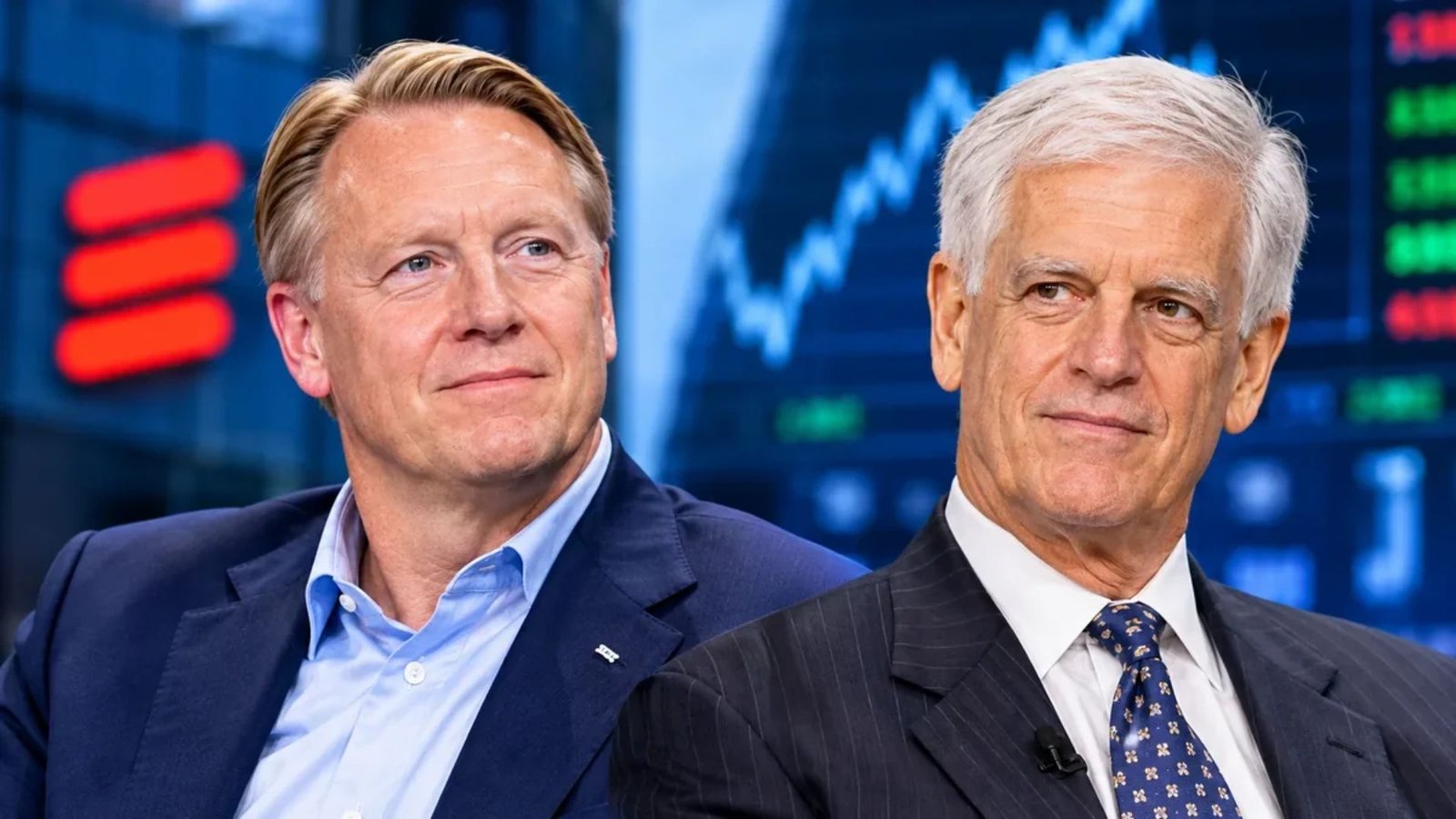
Hans Vestberg is a Swedish business executive best known for leading Ericsson and Verizon Communications. Mario Gabelli is an American investor famous for founding GAMCO Investors. Both men have built successful careers in different industries. Vestberg shaped telecommunications through technology and network investments. Gabelli earned recognition through financial research and value investing. Their names attract attention because their business interests sometimes overlap. However, there is no confirmed formal business partnership. Their careers reveal interesting differences in leadership and strategy.
Net worth also makes their backgrounds interesting. Mario Gabelli has an estimated net worth of $2.1 billion, according to Forbes’ November 2026 real-time estimate. Hans Vestberg’s estimated net worth stands near $84 million, according to reported insider holdings. These figures aren’t official personal financial statements. This article examines their careers, achievements, investments, and professional connections. It also explains what separates these two influential business leaders.
Who Is Hans Vestberg?
Hans Vestberg is a Swedish business executive. He became famous through telecommunications leadership. His career includes Ericsson and Verizon Communications. He helped guide major technology investments.
Born in Hudiksvall, Sweden, Vestberg studied business. He graduated from Uppsala University in 1991. Soon afterward, he joined Ericsson. His early career involved international assignments and financial leadership.
Vestberg eventually became Ericsson’s chief executive. Later, he moved into Verizon’s leadership team. He became Verizon’s CEO in August 2018. His chairman role followed in March 2019. He left both positions in October 2025.
Quick Profile of Hans Vestberg
- Full name: Hans Erik Vestberg
- Birth date: June 23, 1965
- Birthplace: Hudiksvall, Sweden
- Nationality: Swedish
- Education: Uppsala University
- Previous company: Ericsson
- Former employer: Verizon Communications
- Former position: Verizon chairman and CEO
- Technology focus: 5G and network infrastructure
- Current public roles: Board and advisory positions
His career reflects steady professional growth. He gained experience across several countries. That international background shaped his leadership approach.
Hans Vestberg’s Role at Verizon
Hans Vestberg joined Verizon during 2017. He initially served as chief technology officer. He also led the Global Networks organization. His responsibilities included network strategy and technology development.
In August 2018, he became CEO. The board appointed him chairman in 2019. His leadership focused heavily on infrastructure. Verizon invested in wireless and fiber networks.
The company also expanded its 5G strategy. These investments supported consumer and business services. They helped strengthen Verizon’s network capabilities. However, major infrastructure projects require substantial spending. They also involve long-term financial risks.
In October 2025, Verizon announced leadership changes. Dan Schulman replaced Vestberg as CEO. Mark Bertolini became board chairman. Vestberg moved into a special advisor position. His planned advisory term ended October 4, 2026.
5G Network Innovation
Vestberg played an important role in 5G. He helped develop Verizon’s network strategy. The company expanded its fifth-generation wireless services. These networks support faster data connections.
5G technology offers several business advantages:
- Faster wireless communication
- Better network capacity
- Improved connected device support
- Lower latency in suitable conditions
- New industrial technology applications
However, network quality requires more than technology. Companies must invest in physical infrastructure. They also need reliable spectrum access. Fiber connections support many wireless networks.
Verizon’s 5G strategy included these investments. Its approach targeted consumers and businesses. It also supported connected services and innovation.
Digital Transformation Leadership
Digital transformation changes how businesses operate. It also changes customer experiences and services. Vestberg understood this challenge through telecommunications.
Traditional carriers mainly sold phone services. Modern networks support many additional products. These include home internet and business connectivity. They also support cloud-based and connected services.
Verizon invested in network infrastructure and fiber. It expanded services beyond traditional wireless plans. This strategy reflected changing customer expectations.
For example, businesses need reliable connections. Remote workers also depend on strong networks. Streaming platforms require consistent internet performance. These demands make infrastructure more important.
Vestberg’s technology background supported these priorities. His leadership connected technical and business decisions.
Hans Vestberg’s Leadership Style
Hans Vestberg developed a technology-focused leadership approach. His career shows several consistent professional strengths. These include innovation, international experience, and planning.
His leadership also involved difficult decisions. Large network investments require careful financial judgment. Executives must balance growth and profitability.
Innovation
Innovation played a central role throughout Vestberg’s career. He supported new telecommunications technologies and services. His work included 5G network development. He also promoted mobile edge computing.
Innovation requires patience and strong execution. Companies cannot change industries overnight. They need skilled teams and investment. They must also understand customer needs.
Global Perspective
Vestberg developed experience across international markets. His Ericsson career involved multiple countries. These assignments strengthened his business understanding.
Global telecommunications depends on international cooperation. Companies work with suppliers and governments. They also manage complex supply chains.
His experience helped him understand these challenges. It also supported cross-border business leadership.
Strategic Planning
Strategic planning requires long-term thinking. Telecommunications infrastructure demands major financial commitments. Companies must prepare for future customer needs.
Vestberg’s financial experience supported this approach. He served as Ericsson’s chief financial officer. Later, he led major operating organizations.
That combination helped connect finance and technology. It also shaped his executive leadership style.
Who Is Mario Gabelli?
Mario Gabelli is an American value investor. He founded the investment firm GAMCO Investors. His career focuses on company research and valuation. He became known for disciplined investment strategies.
Gabelli was born June 19, 1942. His birthplace was the Bronx, New York. He graduated from Fordham University in 1965. Later, he earned an MBA from Columbia. He also holds the CFA designation.
His investment career began through equity research. He studied companies before making investment decisions. This approach shaped his professional reputation. Eventually, he built his own investment firm.
Quick Profile of Mario Gabelli
- Full name: Mario Joseph Gabelli
- Birth date: June 19, 1942
- Birthplace: Bronx, New York, USA
- Nationality: American
- Education: Fordham University
- MBA: Columbia Business School
- Professional credential: Chartered Financial Analyst
- Main company: GAMCO Investors
- Investment approach: Value investing
- Famous strategy: Private Market Value with a Catalyst
- Other business connection: Associated Capital Group
Gabelli’s influence extends beyond investment management. He has supported universities and educational programs. His work also includes charitable contributions. These activities reflect his broader professional interests.
Hans Vestberg’s Early Career and Education
Hans Vestberg developed his career through Ericsson. His education provided an early business foundation. He graduated from Uppsala University in 1991.
That same year, Vestberg joined Ericsson. He began working within Ericsson Cables. His responsibilities gradually expanded over time. He also accepted international management assignments.
His career included positions in several countries. These included Brazil, China, Chile, and Mexico. Such experience strengthened his international business knowledge.
In 2007, Vestberg became Ericsson’s CFO. The company later appointed him president and CEO. He officially assumed that position in 2010. He remained in the role until 2016.
His early career offers useful lessons. Professional growth often requires patience and experience. Learning one industry can create opportunities. International assignments can also strengthen leadership skills.
Hans Vestberg at Verizon Communications
Vestberg joined Verizon in April 2017. He initially became its chief technology officer. He also led the Global Networks organization.
His appointment brought technical industry experience. Verizon wanted stronger network development and innovation. Vestberg understood telecommunications infrastructure through Ericsson.
His major leadership milestones included:
| Year | Career development |
| 2017 | Joined Verizon as CTO |
| 2018 | Became Verizon CEO |
| 2019 | Became board chairman |
| 2025 | Left CEO and chairman positions |
| 2025 | Started special advisor responsibilities |
| 2026 | Reached scheduled advisory term conclusion |
His leadership included several major priorities. These included 5G and fiber broadband. He also supported connected business services.
However, his tenure faced business challenges. Network spending required significant capital allocation. Competition also pressured wireless customer growth. Verizon needed to balance investment and returns.
In October 2025, Dan Schulman replaced Vestberg. The leadership change marked a new chapter. Vestberg continued supporting the transition temporarily. Verizon’s official announcement outlined those arrangements.
Mario Gabelli: Background and Professional Identity
Mario Gabelli built his reputation through research. He studies companies before valuing their shares. His approach focuses on business fundamentals.
Gabelli believes investors should understand company value. Stock prices don’t always reflect that value. This difference creates potential investment opportunities.
He founded GAMCO Investors during 1977. The firm later developed several investment products. These included mutual funds and hedge funds. Its business expanded across different investment markets.
Gabelli also holds leadership positions elsewhere. He has connections with Associated Capital Group. He leads GAMCO’s value investment activities. His public company responsibilities extend further.
One example is LICT Corporation. Gabelli serves as its interim chairman. He also serves as its chief executive. The company operates in communications and broadband.
His professional identity combines several strengths:
- Equity research and financial analysis
- Investment management and portfolio strategy
- Company valuation and stock selection
- Corporate governance and board leadership
- Education support and philanthropy
These activities explain his lasting business influence.
Education and the Foundations of Mario Gabelli’s Career
Education helped shape Gabelli’s investment philosophy. He graduated from Fordham University in 1965. His degree focused on accounting and business.
He later attended Columbia Business School. He completed his MBA in 1967. Columbia strengthened his financial education further.
Gabelli also earned the CFA designation. This credential recognizes investment analysis expertise. It requires examinations and professional experience.
His education supported several important skills:
- Understanding financial statements and accounting.
- Studying company balance sheets and cash flow.
- Evaluating business performance and financial risks.
- Comparing market prices against estimated values.
- Making decisions through detailed research.
These skills remain important for investors. They help separate business value from speculation.
The Founding and Development of GAMCO Investors
Gabelli started building his investment business during 1976. He first established Gabelli & Company. It operated as an institutional research business.
In 1977, he founded GAMCO Investors. The firm provided investment management services. Its research-based approach became its central strength.
The company gradually expanded its business. It introduced additional investment products over time. Its first hedge fund arrived during 1985. Mutual funds followed during 1986.
Gabelli’s business later developed several investment strategies. These included institutional and retail products. The firm also managed closed-end funds.
According to its September 2025 results, GAMCO reported approximately $35.05 billion in assets. This figure included equity and fixed-income assets. It represented the firm’s reported total AUM.
GAMCO Milestones
| Year | Important development |
| 1976 | Gabelli & Company began operations |
| 1977 | GAMCO Investors was founded |
| 1985 | First hedge fund launched |
| 1986 | Mutual fund business expanded |
| 2015 | Associated Capital Group separated |
| 2022 | GAMCO moved from NYSE listing |
| 2025 | Reported approximately $35.05 billion AUM |
The firm’s growth reflects long-term development. Research remained central to its business model. Its investment products also expanded over time.
Understanding Mario Gabelli’s Value Investing Philosophy
Gabelli follows a research-driven investment philosophy. His strategy focuses on company value. He looks beyond short-term market prices.
His best-known method uses a catalyst. This approach is called Private Market Value with a Catalyst. It combines company valuation with potential business events.
Private Market Value estimates an entire company’s worth. Investors consider what informed buyers might pay. They then compare that estimate against market prices.
A catalyst may help unlock hidden value. Several events can create such opportunities:
- Corporate restructuring
- Business sales or acquisitions
- Management changes
- Corporate spin-offs
- Regulatory developments
- Strategic business improvements
For example, imagine an undervalued company. Its assets may exceed its market valuation. A planned business sale could change expectations. Investors might then recognize its underlying value.
However, catalysts don’t guarantee successful investments. Business conditions can change unexpectedly. Valuation also involves judgment and uncertainty.
Gabelli’s method combines patience with research. It avoids relying entirely on market timing.
Hans Vestberg and Mario Gabelli: Comparing Their Careers
Hans Vestberg and Mario Gabelli built different careers. One focused on technology and connectivity. The other concentrated on investments and valuation.
Their professional backgrounds show different strengths. Vestberg understands networks and business operations. Gabelli understands financial markets and companies.
| Comparison | Hans Vestberg | Mario Gabelli |
| Birthplace | Sweden | United States |
| Main industry | Telecommunications | Asset management |
| Education | Uppsala University | Fordham and Columbia |
| Main organization | Ericsson and Verizon | GAMCO Investors |
| Core expertise | Network infrastructure | Company valuation |
| Career strength | Technology leadership | Investment research |
| Main approach | Strategic execution | Fundamental analysis |
| Business focus | Connectivity and innovation | Long-term value creation |
Despite these differences, similarities exist. Both men believe in long-term planning. Both developed deep industry knowledge. Both built strong professional reputations.
Their careers also show different business paths. Vestberg advanced through corporate management positions. Gabelli built an independent investment organization.
Neither approach guarantees business success. Both require knowledge and careful decisions.
Why Hans Vestberg and Mario Gabelli Attract Business Interest
People search for both names together. Several factors may explain this interest. Their careers involve prominent American businesses. Their industries also share financial connections.
Here are the main reasons:
1. Their business influence
Vestberg led a major telecommunications company. Gabelli built a respected investment organization. Both attracted attention from business professionals.
2. Their industry overlap
Telecommunications companies attract institutional investors. Gabelli’s research includes communications businesses. LICT Corporation provides a direct example.
3. Their leadership experience
Both men managed important business responsibilities. Their decisions affected companies and investors. Their careers offer useful leadership comparisons.
4. Their financial importance
Verizon requires major network investments. GAMCO manages money across investment products. Both businesses involve long-term capital decisions.
5. Their professional achievements
Vestberg helped advance network infrastructure. Gabelli developed a recognized investment philosophy. Their achievements attract business readers.
These factors explain the search interest. However, they don’t prove personal connections.
Mario Gabelli’s Investment Philosophy
Mario Gabelli follows a disciplined investment research process. His strategy focuses on business value. He studies companies before selecting investment opportunities.
His approach combines financial analysis and patience. It also considers possible corporate events. These factors help identify potential investment opportunities.
Fundamental Analysis
Fundamental analysis examines a company’s financial condition. Investors study earnings, debt, and cash flow. They also examine business operations and management.
Gabelli uses bottom-up research for company evaluation. This means studying individual businesses carefully. Analysts examine financial statements and industry conditions.
Important areas include:
- Revenue growth and operating performance
- Company debt and financial obligations
- Balance sheet strength and cash flow
- Management decisions and corporate governance
- Competitive position within the industry
- Future growth opportunities and business risks
For example, consider a company with debt. Its shares might appear unusually cheap. However, financial problems could explain that discount. Investors must examine the complete business.
Fundamental analysis helps identify these important differences. It also reduces dependence on market speculation.
Long-Term Value Creation
Gabelli’s approach emphasizes long-term value creation. He looks beyond daily stock market movements. His investment philosophy requires patience and discipline.
Some investments need years before realizing value. Corporate changes can take considerable time. Market recognition also doesn’t happen immediately.
This approach differs from short-term trading. Short-term traders often focus on price movements. Long-term investors study underlying business performance.
Gabelli’s strategy considers several important factors:
- Sustainable business earnings
- Management quality and operational strength
- Long-term industry growth
- Company assets and financial resources
- Potential catalysts for value realization
However, patience alone doesn’t guarantee returns. Investors must continually review their investment assumptions. Companies can also face unexpected challenges.
Corporate Events and Market Research
Corporate events can influence company valuations. Gabelli studies these developments through research. They may create opportunities for investors.
Important corporate events include:
- Mergers and acquisitions: Companies combine business operations.
- Corporate spin-offs: Businesses separate individual divisions.
- Restructuring: Companies change their operating structure.
- Management changes: New leaders introduce different strategies.
- Regulatory changes: New rules affect business opportunities.
These developments can influence market expectations. They may also change estimated company values.
Gabelli’s research considers these possible catalysts. His approach combines financial analysis with industry knowledge. This helps investors understand potential opportunities.
Hans Vestberg vs Mario Gabelli: Two Different Paths to Business Success
Hans Vestberg vs Mario Gabelli offers an interesting comparison. Their careers demonstrate different business leadership approaches. One built networks and technology organizations. The other developed investment strategies and financial businesses.
Vestberg advanced through corporate management positions. He worked within Ericsson for decades. Later, he became Verizon’s chief executive. His responsibilities involved technology and operations.
Gabelli followed another professional route. He developed expertise through equity research. Then he established his investment management company. His work focused on financial analysis.
Consider their approaches through practical examples:
| Business situation | Vestberg’s approach | Gabelli’s approach |
| Technology investment | Develop network infrastructure | Evaluate company investment value |
| Business growth | Expand connectivity services | Identify undervalued opportunities |
| Financial decisions | Allocate capital toward networks | Study assets and cash flow |
| Industry changes | Adopt new technologies | Evaluate changing business valuations |
| Long-term strategy | Improve network capabilities | Wait for value realization |
Their professional strengths serve different purposes. Technology companies need strong operating leadership. Investment firms need careful financial judgment.
Both careers demonstrate the value of expertise. They also highlight the importance of patience. Successful business decisions require informed judgment.
Why Their Careers Are Important in Their Industries
Their achievements influenced different business sectors. Vestberg contributed to telecommunications leadership. Gabelli helped shape value investment practices.
Understanding their careers reveals important industry trends. Technology and finance increasingly influence each other. Their professional experiences help explain why.
Hans Vestberg: Building the Future of Connectivity
Hans Vestberg helped guide telecommunications innovation. His work involved 5G network deployment. He also supported fiber network expansion.
Modern connectivity supports everyday business activities. Companies depend on reliable digital infrastructure. Consumers expect fast and stable internet.
Telecommunications networks also support newer technologies. These include cloud computing and artificial intelligence. Connected devices also depend on strong networks.
Vestberg’s leadership emphasized several important areas:
- 5G technology and wireless communication
- Fiber broadband and network infrastructure
- Mobile edge computing and connected services
- Business connectivity and customer experience
- Long-term telecommunications investment
His career also highlights technology leadership. Network investment requires careful strategic planning. Companies must balance costs and performance.
The telecommunications industry continues changing rapidly. Future networks will demand further investment. Skilled leadership will remain important.
Mario Gabelli: Understanding the Value of Businesses
Mario Gabelli influenced investment management through research. His work emphasizes business value and discipline. His investment philosophy encourages deeper company analysis.
GAMCO Investors became his main professional platform. The firm developed multiple investment products. It also built a recognized research organization.
Gabelli’s influence extends into corporate leadership. He serves in important company positions. His involvement with LICT provides an example.
His approach teaches investors several lessons:
- Study companies before purchasing their shares.
- Understand financial statements and business operations.
- Consider long-term value rather than speculation.
- Identify events that could unlock business value.
- Review investment risks before making decisions.
His career demonstrates the importance of research. It also shows how expertise builds credibility.
Leadership Lessons From Hans Vestberg and Mario Gabelli
Their careers provide useful leadership lessons. Both men developed expertise through experience. Their professional journeys offer practical examples.
Build Deep Industry Knowledge
Industry knowledge helps leaders make informed decisions. Vestberg understood telecommunications technology and infrastructure. Gabelli developed deep financial research expertise.
Both careers show the importance of learning. Strong knowledge improves professional judgment. It also helps identify business opportunities.
Think Beyond Short-Term Results
Long-term thinking shaped both professional journeys. Network development requires years of investment. Value investing also requires patience.
Short-term pressure can influence business decisions. However, strong leaders consider future outcomes. They balance immediate needs with lasting goals.
Adapt to Industry Change
Industries change through technology and competition. Leaders must recognize new business opportunities. They should also respond to changing conditions.
Vestberg supported major technology developments. Gabelli expanded investment products and services. Both adapted while maintaining their expertise.
Create Value for Stakeholders
Business leaders serve several important groups. These include customers, employees, and shareholders. Strong decisions should consider their interests.
Verizon invested in network infrastructure. GAMCO focused on investment research and returns. Both examples highlight stakeholder value.
However, stakeholder interests can sometimes conflict. Leaders must balance competing business priorities. Clear communication helps maintain professional trust.
Build a Strong Professional Reputation
A professional reputation develops through consistent performance. Both careers demonstrate long-term industry involvement. Their achievements created lasting business recognition.
Trust also requires responsible decision-making. Leaders must communicate clearly and honestly. They should acknowledge risks and mistakes.
A strong reputation supports future opportunities. It also strengthens professional relationships.
Frequently Asked Questions
Are Hans Vestberg and Mario Gabelli business partners?
No, there is no verified evidence confirming partnership. Their careers involve different industries and organizations. Their professional interests overlap through telecommunications investment.
Who is Hans Vestberg?
Hans Vestberg is a Swedish business executive. He formerly led Verizon Communications and Ericsson. His career focuses on telecommunications, technology, and network development.
Is Hans Vestberg still the CEO of Verizon?
No, Hans Vestberg left Verizon’s CEO position. Dan Schulman became CEO on October 4, 2025. Vestberg subsequently served as a special advisor.
What is Hans Vestberg doing in 2026?
Vestberg’s scheduled Verizon advisory term ended October 4, 2026. He also holds board and advisory positions, including BlackRock and Evercore, according to company profiles.
Who is Mario Gabelli?
Mario Gabelli is an American value investor. He founded GAMCO Investors in 1977. His investment approach emphasizes company research and long-term value.
Conclusion
Hans Vestberg and Mario Gabelli have built successful careers in different industries. Vestberg became famous for leading Ericsson and Verizon Communications. Gabelli earned recognition through investing and founding GAMCO Investors. Their professional interests sometimes overlap through telecommunications and corporate investments. However, no confirmed evidence proves a formal business partnership. Both men have shown the value of experience, patience, and smart decisions. Their careers offer useful lessons for business leaders and investors.
When discussing Hans Vestberg and Mario Gabelli, net worth also attracts attention. Mario Gabelli has an estimated net worth of billions. Hans Vestberg’s wealth comes mainly from his executive career and investments. However, exact figures aren’t publicly confirmed for both men. Their real achievements go beyond money. Vestberg helped advance telecommunications technology while Gabelli built a respected investment business. Their stories show how knowledge and hard work can create lasting success
.

QuotesRipple is a collection of inspiring quotes and thoughtful sayings, managed by Ryan Mitchell, an SEO content writer with 2 years of experience, dedicated to publishing motivational content that leaves a lasting impression.
1 thought on “Hans Vestberg and Mario Gabelli: Are They Connected? ”